If you’re a business owner preparing for your first statutory audit, the process can seem overwhelming. But the truth is that most of the difficulty comes from poor preparation, not from the audit itself. A well-managed audit should feel like a structured review of your financial health, not an interrogation.
This guide covers what to expect, what you need to prepare, and how to make the process as smooth as possible for your company and the auditors.
Preparing for your first audit – where to start
Start with early planning. UK companies that cross the audit threshold for the first time may not realise that the audit encompasses so much more than just checking the numbers. Auditors are required to assess internal controls and processes, verify financial information, and form an opinion on whether your accounts give a true and fair view under the applicable financial reporting framework.
Ideally, begin preparing three to four months before your year-end date. That gives your finance team time to prepare and address any issues without the pressure of a deadline.
1. Engage with your auditor early
Don’t wait until after year end to choose an audit firm. The audit team needs time to build an understanding of the business, plan their audit work, and tell you what they’ll need from you. Appointing six months before your year-end is ideal. Three months is workable. Any later and you’re both under unnecessary pressure during audit season.
Your auditor should be registered with a recognised supervisory body and have audit experience in your industry. A good advisor will explain the audit approach clearly and help identify areas that need attention ahead of the audit. Ask about their timeline, fee structure, and what deliverables you should expect. Getting the right audit service from day one can make the whole experience far less stressful.
2. Get your accounting records in order
The audit team will need access to your accounting system, bank statements, sales and purchase invoices, payroll records, and board minutes. If your bookkeeping is up to date and well-organised, the audit will be faster and cheaper. That matters – fees for UK companies just above the threshold typically range from 5,000 to 15,000.
Common problem areas in the first year of an audit include:
- Incomplete bank reconciliations
- Missing or unmatched purchase invoices
- Payroll records that don’t tie to the nominal ledger
- Fixed asset registers that haven’t been maintained
- Intercompany balances that don’t agree across entities
Your auditor will send a “prepared by client” (PBC) list setting out exactly the information they need to complete their testing. Review it carefully and start gathering documents early.
3. Prepare draft accounts
In most cases, you’ll be expected to prepare draft audited accounts before the audit starts. These don’t need to be perfect, but they should be materially complete. The auditor will audit the accounts, not prepare them for you (though some accountancy firms offer accounts preparation as a separate service).
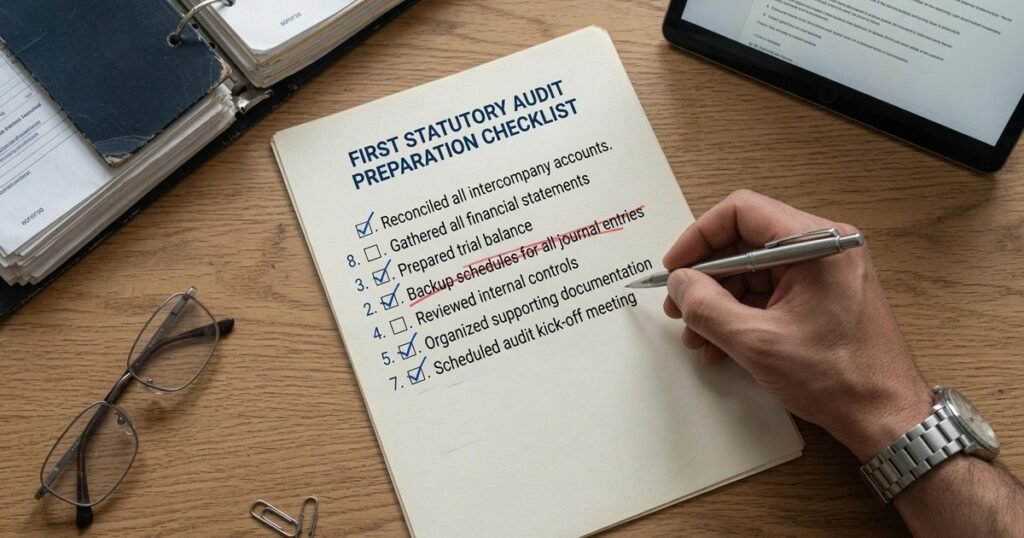
Make sure your balance sheet reconciliations are done. Every line on your closing balance sheet must be supported by a schedule that explains what the number is and how it was calculated. This is where first-time company audit clients often struggle.
4. Understand what will be tested
The audit follows a risk-based approach under International Standards on Auditing (ISAs) – the UK auditing standards and accounting standards that govern how a UK statutory audit is conducted using UK GAAP or IFRS. Your auditor will:
- Assess the risk of material misstatement in the financial statements
- Test the internal controls that prevent or detect errors
- Sample transactions to check they’ve been recorded correctly
- Verify significant balances like trade debtors, stock, and fixed assets
- Review going concern, checking the company can continue operating for at least 12 months from the date the accounts are signed
- Evaluate financial reporting policies and check that disclosure notes meet all reporting requirements under UK law
Your auditor will typically focus testing on high-risk areas. They’re not checking every transaction – they’re forming an opinion on whether the accounts as a whole are materially correct.
5. Prepare for audit queries
Your finance team will face questions during audit fieldwork. The faster they can respond, the faster the audit finishes. Designate one or two people as the main contacts and make sure they have access to what the auditor needs throughout the process.
Common areas that generate queries:
- Revenue recognition policies (especially for contracts spanning the year end)
- Related party transactions and director interests
- Estimates and judgements (bad debt provisions, useful lives of assets)
- Post-balance-sheet events and changes in your business since the audit period
- Going concern assumptions and cashflow forecasts
6. Board minutes and governance
Your auditor will want to see board minutes for the financial year. These should record key decisions like dividend payments, significant contracts, and any matters relevant to reporting and audit requirements. Check that controls are in place to capture these decisions properly.
If your organisation doesn’t keep formal minutes, start now. The audit requires evidence that the directors were properly informed and involved in financial decisions – it’s a legal requirement, and your auditor will flag it if it’s missing.
What to expect during the audit
A typical audit for a company just above the threshold takes two to five days on site, depending on how the business operates and its complexity. Your auditor will work through their audit planning and audit testing programme, raise queries, and help identify any adjustments needed.
After on-site work is complete, you’ll receive a draft audit report and a management letter with audit findings. The management letter highlights internal control weaknesses and recommendations. Don’t treat it as criticism – it’s designed to strengthen financial controls and help your organisation improve. First-time audits almost always produce more findings than subsequent years.
Key deadlines and filing requirements
Private companies must file their accounts with Companies House within 9 months of their financial year ending. The audit needs to be completed before filing, so you need to work backwards from that deadline and give yourself time to prepare. Late filing attracts automatic penalties, and the disruption to your business of a rushed audit is never worth it.
Make sure you’re clear on all legal requirements and filing requirements before the audit period begins. Your chartered accountants can help identify areas where you might need to act quickly to stay compliant.
Choosing the right audit firm
Not all audit firms are the same. For a company going through its audit for the first time, you want a firm that takes time to explain how the process works and can make a real difference to your confidence in the numbers. Look for ICAEW or ACCA registered firms with specific experience within the business sector you operate in.
Ask about their charter and how they plan engagements. The right service provider will make the audit process smoother and deliver real value, not just a signature on the report. A smooth audit starts with picking the right firm.
How to make it easier next year
Your audit in year one sets the baseline. Many of the issues discovered won’t recur if you act on the management letter. Keep your records organised, maintain your fixed asset register, reconcile your balance sheet monthly, and keep board minutes up to date. Early planning makes each subsequent year much easier. Your auditor will already know the business, and you’ll know what to expect from them.
If your company needs a UK audit and you want practical support from an experienced team, call us on 0161 832 4451 or request a callback.